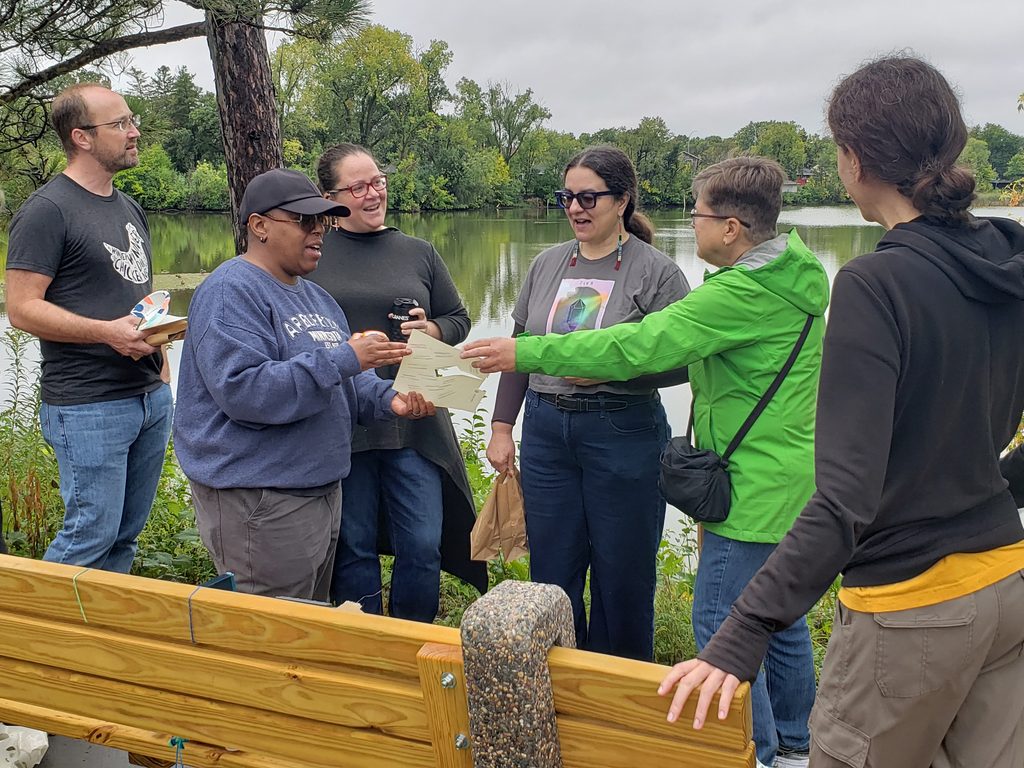
We had a great part-2 of our buckthorn ink workshop this morning. People who attended part 1 last weekend to collect their buckthorn berries had all week to make their ink and experiment with colors created by adding common kitchen ingredients (baking soda, vinegar, alum, etc.).
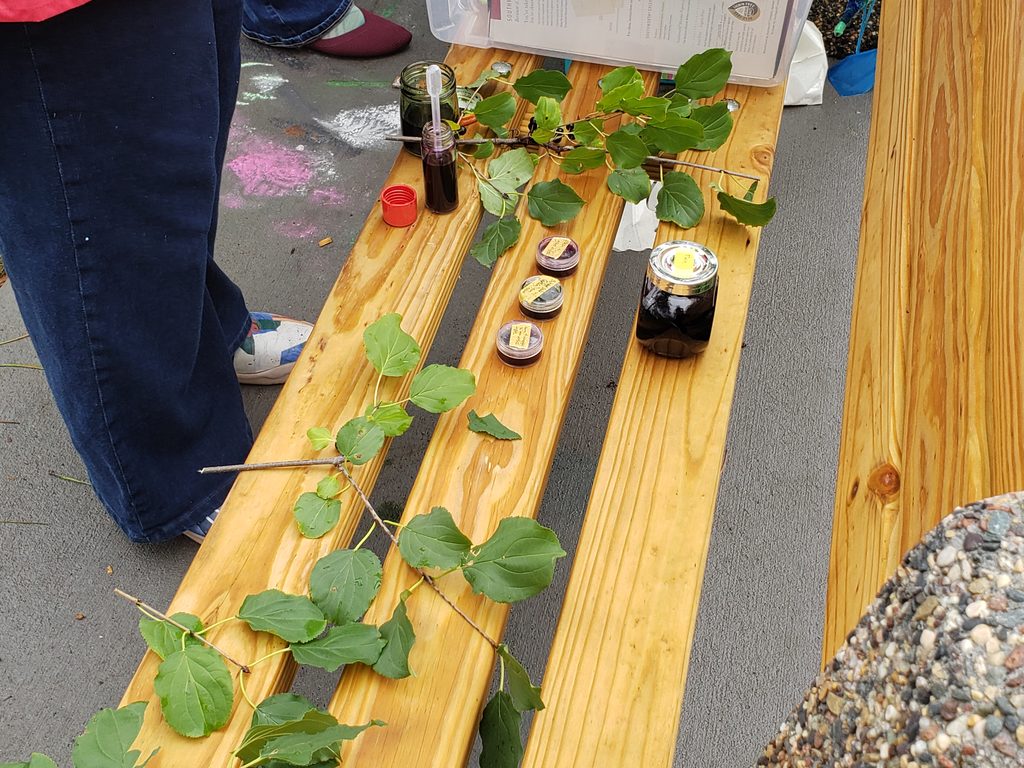
Participants discussed their approaches to boiling down the ink, different additives, and storage/preservation options.
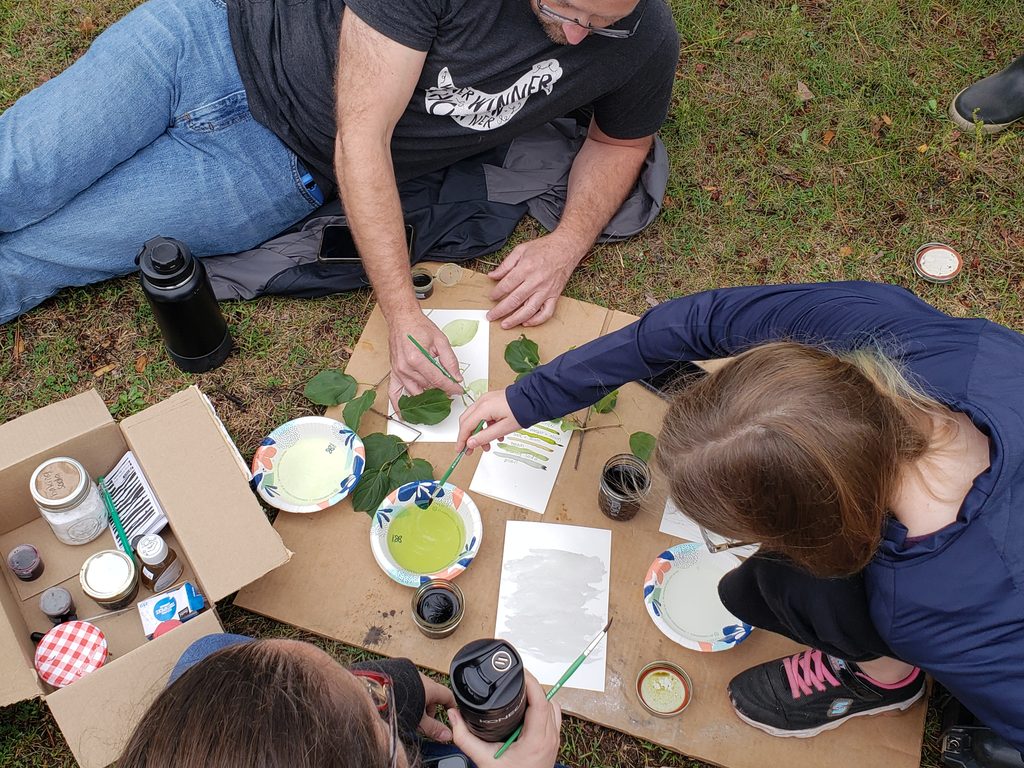
Everyone took some time to try out their inks and trade with one another based on color availability. It was tons of fun!
About Grass Lake Wetland, Minneapolis
Grass Lake is a 27 acre wetland, and although surrounded by an urban environment, it attracts a large diversity of wildlife. Grass Lake is a DNR protected water body and is under the jurisdiction of the Minnehaha Creek Watershed District. The land around the lake is owned by the City of Minneapolis and is under the management of Public Works. Grass Lake, Richfield Lake, and Wood Lake, while separate entities today, were once a single system. There is currently a connecting pipe between Grass Lake and Richfield Lake.
The entirety of Grass Lake Wetland falls within a Minneapolis Park and Recreation Board (MPRB) Habitat Corridor, highlighting the location’s importance when considering planning efforts. Additionally, MPRB’s comprehensive plan, “Parks for All, 2021-2036,” describes a goal (Goal #6) to strengthen ecological connections of higher quality ecological areas and minimizing the effects of habitat fragmentation. Grass Lake serves as the southernmost body of water in Minneapolis nearest to a noted biodiversity hot spot at the intersection of Bryant Avenue South and Minnehaha Creek, thereby functioning as an important connector and protective refugia for the animals that shape our local ecosystems.
Planting a variety of native plants at Grass Lake helps prevent buckthorn re-establishment, contributes to soil health and stability, provides food and shelter throughout the life cycles of pollinators and wildlife, and builds resilience for the future.